The 7th Day of Christmas. Walking with Bonhoeffer into the New Year

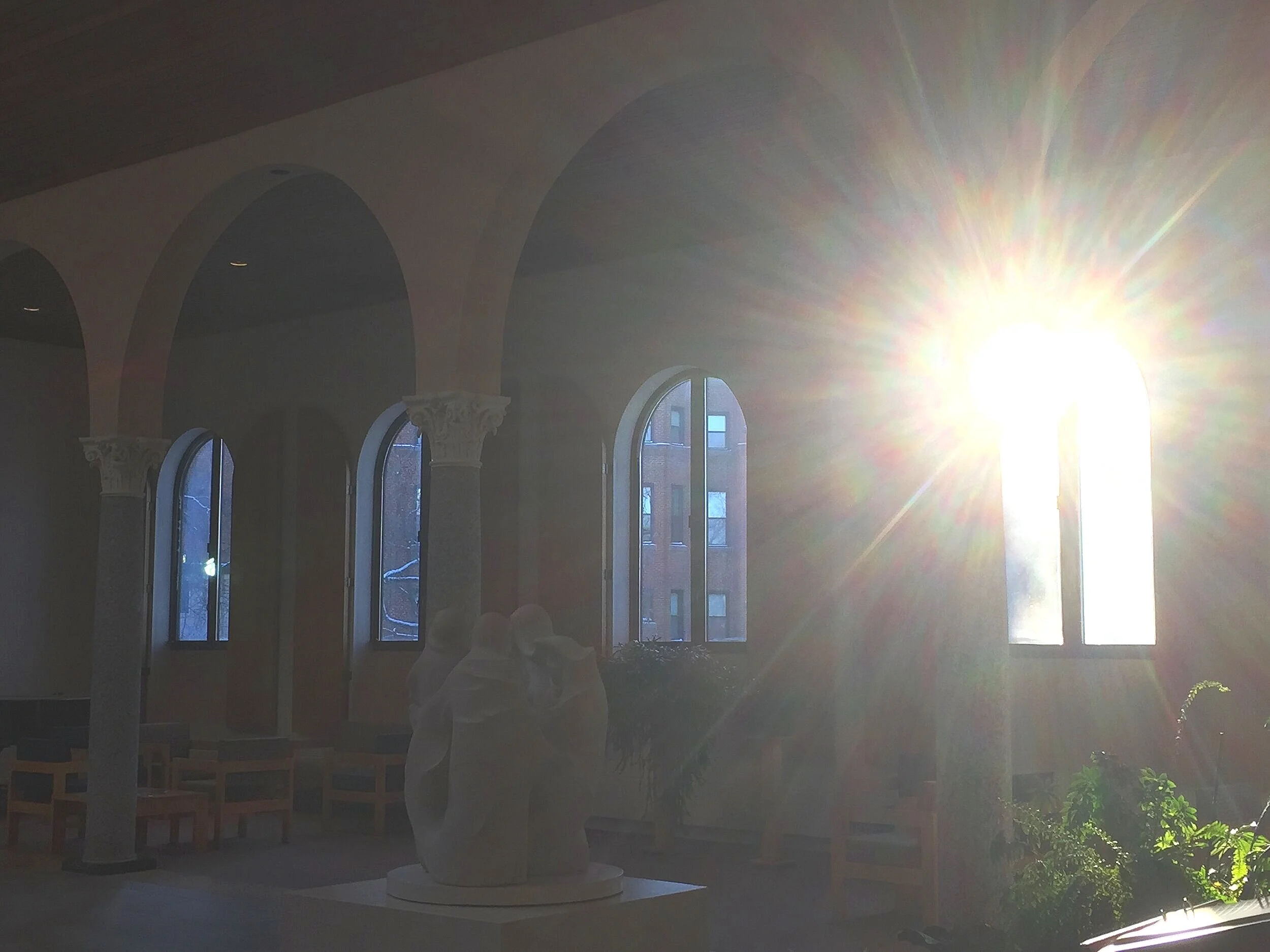
With this image of the sun breaking into the Sacred Heart Chapel at Saint Benedict's monastery, MN on New Year's Eve we greet you one last time in 2020. Von guten Mächten wunderbar geborgen (By gracious powers wonderfully sheltered) is a much-loved hymn that is widely sung in German speaking lands at the turn of the year. May it grant you peace and consolation at the end of this year…

The 2nd Day of Christmas. Finding good ritual

This COVID Christmas invites us like no other to breathe new life into our rituals. The enforced isolation casts us back on our own resources and on our own tenuous grasp of the holy. But it also opens a space that we can fill with rituals that give structure to our longing. They provide a form, a frame, and an architecture in time that support the slow and painful birth of the divine within us and that bind us together in love. Having abandoned them once, we can now re-inhabit them in that love.

Christmas Eve: A Blessing for the Night

This Christmas Eve might be the darkest and quietest night for many, one not seen in a life time. It might well be the night which brings us closest to the original Christmas. No busy church services calling for attention. No big family meals to prepare or plan. No last minute shopping in overflowing malls. Thrown back onto ourselves we walk into this night wondering, quietly, pregnant with the unknown …

When singing the St. Matthew Passion with the Munich Bach choir one moment stood out: silence. The silence entered when our conductor intentionally held onto the rest after Jesus bowed his head and died. He stood still, with his arms in suspension, cradling the time. It was as though the whole audience sighed together, like our hearts stood still for a moment, pausing in unison. Since then I have known that conducting the pause is as important as conducting the whole Passion...

With his Passion JS Bach has created a grand lamentation. He does not to believe that coping with our fears and sorrows means to keep them in check in order to quickly get over them. Instead his music gives us a container for our sorrows and seduces us into the beauty of lamentation. Joining in this orchestrated experience of mourning can actually be self-soothing and a strategy for resilience in the face of tragedy.

A Pandemic, memories of childbirth and JS Bach’s Passion.
Around this time last year, I was carrying a heavy load. Our tender little baby daughter was still growing, but ignoring her due date, making every step and breath more difficult with the hour. When she finally decided to enter this world I was thrown immediately into heavy labor which seemed to stretch for an eternity. Pain beyond any I have known was washing over me, the pangs of labor coming so fast for countless hours that I could barely breath or think. No indeed, it was not the graceful Yoga birth I had envisioned. In the end my baby and I clung to life as my doctor ended our passion by cutting me open, lifting our baby daughter from the wound, and stitching me back together. As they bound me to the operating table, both arms stretched wide open I could not help but remark what that felt like: to be tied to my own cross…


Have you ever been in the eye of a storm? A storm of your own making? I have.

Many times. In fact, I think I am a storm maker. I guess, every parent has some things one does not want the child to learn. Mine would be storm making. Though there are good storms. Needed storms. Snow storms. Rain storms. Storms which clean the air and, just as a snow storm in Minnesota, cover the old grey with a new layer of snow white, dampening the noise and leaving freshness and calm behind.

Finding the key inside. Wrapping up the Christmas season

Have you wrapped up the Christmas season yet after the three kings left the scene? Or may be wondered how to make sense of Divine birth the rest of the year? Here is an invitation to pause at the threshold to “ordinary” times once again and ponder the mystery of Divine birth with a little help from two of my favorite depth psychologists: Søren Kierkegaard and C.G. Jung.